
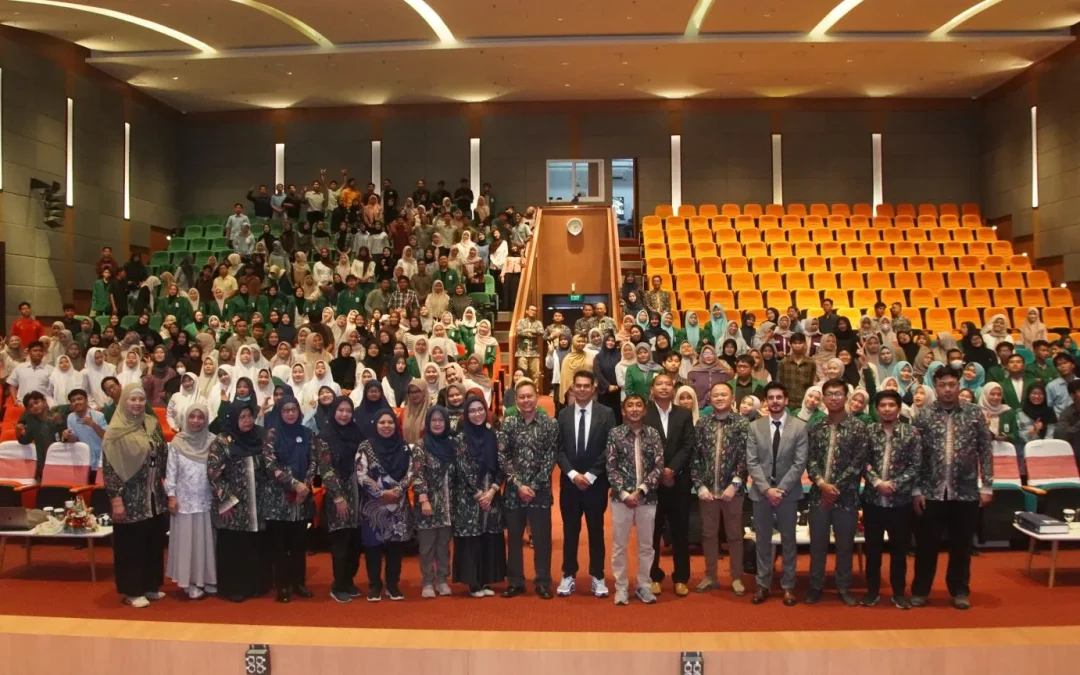
SURABAYA – Universitas Nahdlatul Ulama Surabaya (UNUSA) continues to strengthen its commitment to supporting the Sustainable Development Goals (SDGs) through international partnerships and collaborations. This initiative also supports SDG point 17, which focuses on partnerships for achieving sustainable development goals.
The collaboration discussion with The Kyoto College of Graduate Studies for Informatics (KCGI), Japan, takes place in the meeting room on the 8th floor of UNUSA Tower Building, Campus B. The activity continues with a guest lecture entitled “AI Architecture in Higher Education” at the UNUSA Auditorium on the 9th floor.
During the session, Mr. Ananda Nepal explains how the development of Artificial Intelligence (AI) is transforming higher education systems in many countries. One of the highlighted topics is the concept of academic credit recognition through independent learning supported by digital certificates.
According to him, students can now gain competencies from various global learning platforms such as Coursera, edX, and professional industry training programs. The digital certificates obtained by students can later be verified through AI-based systems to ensure document authenticity, content relevance, and alignment with learning outcomes in higher education institutions.
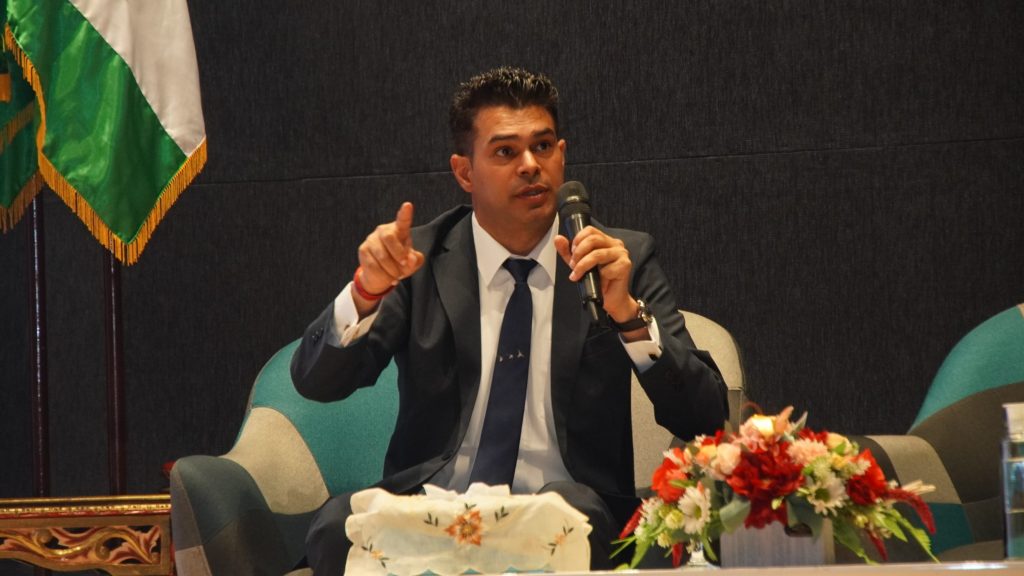
“Universities are no longer the only places where students gain academic credits, but they become institutions that recognize competencies from various learning sources,” he says.
Mr. Ananda Nepal also explains the potential use of AI in transforming academic activities into digital public learning resources. Activities such as lectures, seminars, practical sessions, and student projects can be recorded and processed into different educational content formats.
He states that learning materials such as videos, audio recordings, and transcripts can be processed using AI for creating content summaries, multilingual translations, and information categorization to improve accessibility.
“The results can be published as podcasts, educational videos, and micro-credentials that can benefit wider communities,” he says.
He adds that this concept allows universities to become digital knowledge distribution centers instead of only functioning as formal classroom learning institutions.
During the discussion session, Mr. Ananda Nepal also presents several collaboration opportunities between KCGI and UNUSA, including student and lecturer exchange programs, student and staff inbound activities, joint courses, and collaborative research in technology and Artificial Intelligence (AI).
“In this collaboration, we can identify areas that can be developed together,” he says.
Meanwhile, UNUSA Vice Rector III, Prof. Bambang Sektiari Lukiswanto, welcomes the collaboration opportunity. He states that international partnerships should focus on practical implementation that provides direct benefits for the academic community.
He hopes that the collaboration with KCGI Japan opens broader opportunities for UNUSA students and lecturers to deepen their understanding of Artificial Intelligence while strengthening global competencies in the era of digital transformation. (UNUSA Public Relations)